
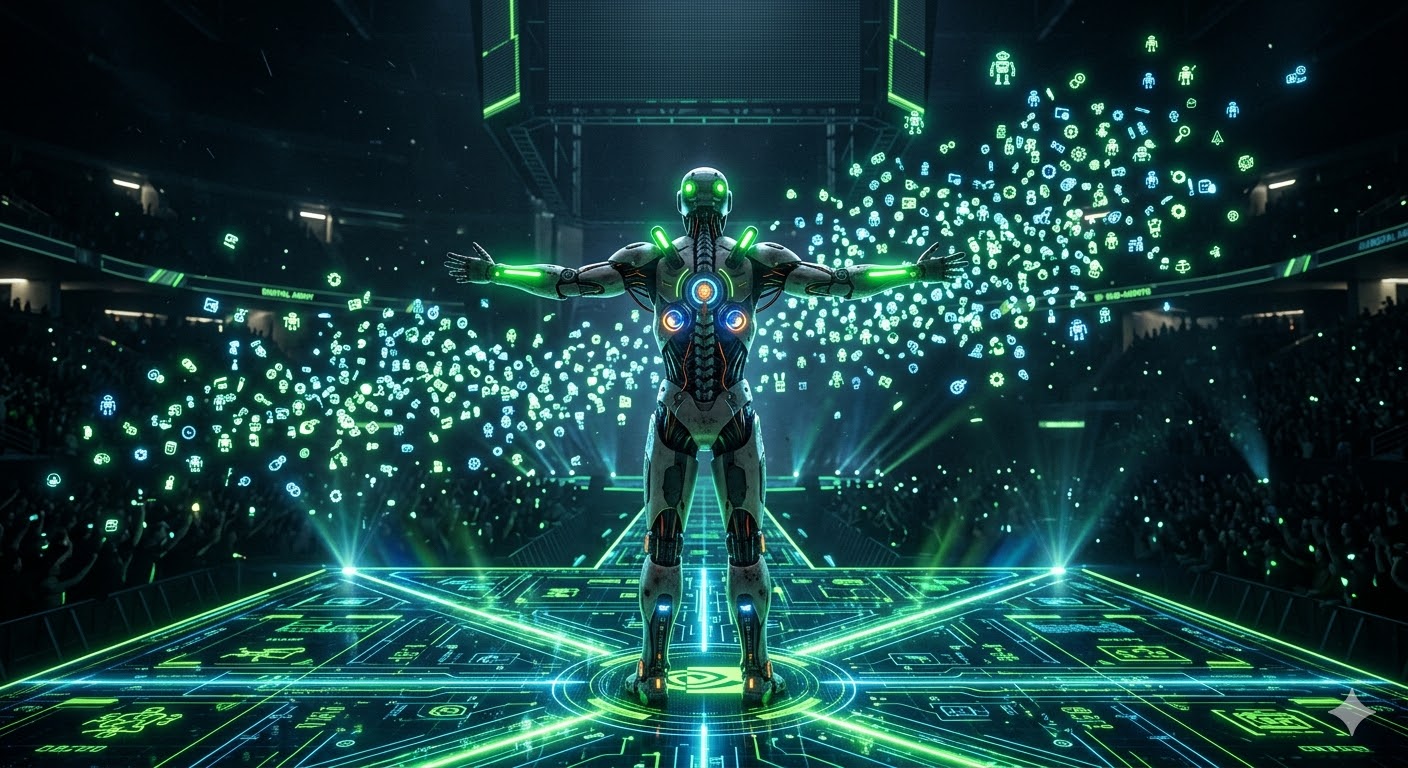
From the graphics card to the World AI: Nvidia boss Jensen Huang has burst a bomb on the GTC26. Anyone who thinks the switch to AI agents is a project for the next few years has underestimated the pace of the current revolution. We’re not talking about nice chat assistants anymore, but about an autonomous workforce.
The Quantum Jump: Why an Agent is not a Chatbot
To understand why the GTC26 is changing everything, we need to clarify a widespread error: Agents are not improved chatbots.
- Chatbots (like ChatGPT or Gemini): They are like extremely well-read librarians. You ask a question and you give an answer. But: You stay in your text box. They ‘know’ a lot, but they ‘do’ nothing.
- AI agents (like OpenClaw or Nemoclaw): An agent is a digital employee with ‘hands’, a memory and permission to perform tasks independently. An agent not only writes an e-mail about a trip – he books the flight, negotiates the hotel and adjusts the calendar if the flight is late.
How these agents ‘learn’ at the speed of light
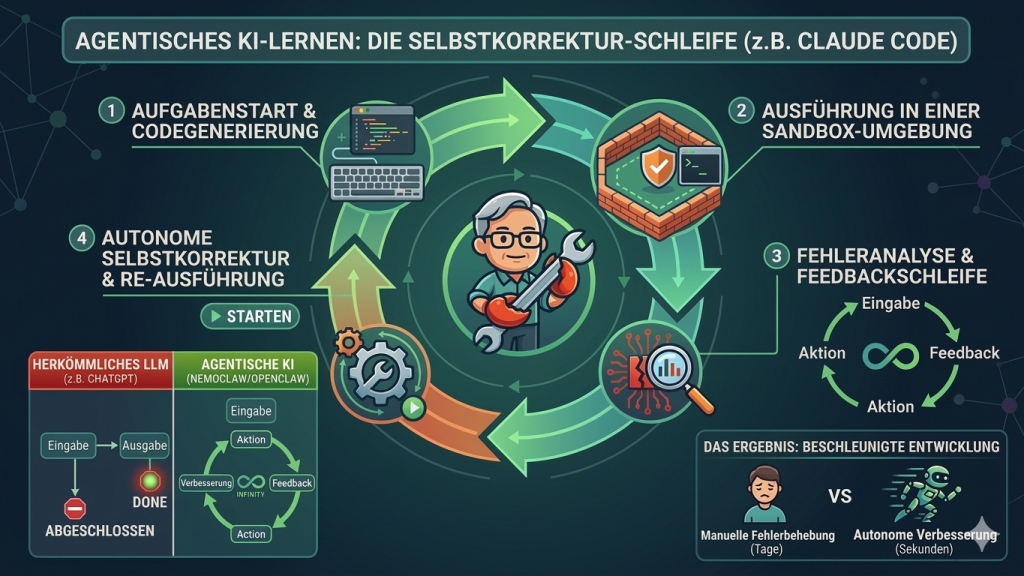
While a classic chatbot (LLM) has to be laboriously retrained for months to become more up-to-date, agent systems learn through every second Experience.
A perfect example is Claude Code: A programming beginner becomes practically completely superfluous here. The agent not only writes the code; He makes it, notices a mistake, corrects himself and tries again until the program runs. He learns by doing – just like a person, only a thousand times faster.
The Alliance of the Giants: Who is changing now?
Jensen Huang (CEO of Nvidia) presented a list of world companies that no longer just experiment with chatbots, but their entire way of working Agentic AI switch. If these heavyweights switch, the rest of the world only has a time window of a few months to remain competitive:
- Adobe: AI agents take over complex, days of design workflows autonomously. Adobe ai
- Paypal: Agents control fraud detection and handle transactions without human intervention. PayPal News
- ServiceNow: Establishment of an ‘Autonomous Workforce’ in which HIS manages the IT infrastructure of entire corporations itself. ServiceNow AI
- Salesforce: With ‘Agentforce’ sales and customer talks are no longer only supported, but managed by agents. Salesforce Agentforce
- Nvidia Nemoclaw: The new platform that gives these agents the necessary security and power. Nvidia Developer
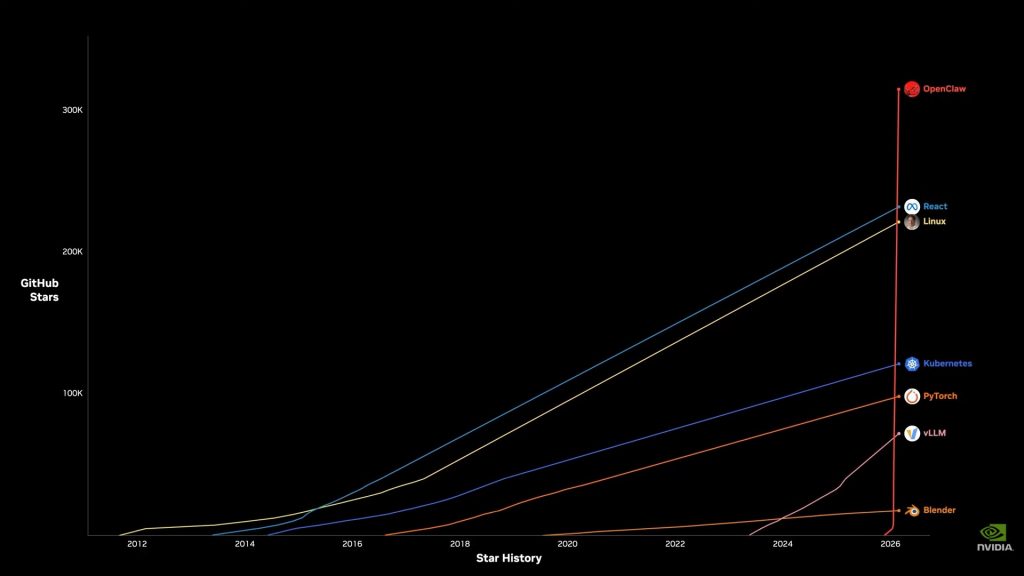
The graphic of the singularity: OpenClaw breaks all records
If you want to understand why the current development is not a normal evolution but a technological explosion, you have to Star History (above) view. She compares the rise of openclaw With the most important software milestones of the last decades:
- The Established (Linux & React): Big projects like the operating system Linux Or the web framework React (from Meta) took over ten years to reach the 200,000 stars mark. Their growth curves are constantly and healthy – a sign of slow, years of acceptance.
- The AI predecessors (Pytorch & VLLM): Even modern AI tools like pytorch or specialized models like maybe show significantly faster growth, but still need years to gain significant market share in the developer world.
- The OpenClaw Vertical (2026): On the far right of the diagram you can see a red line that shoots almost vertically upwards. That’s openclaw. In just a few weeks, this agent system has broken through the 300,000-star brand and thus overtaken legends like Linux and React in passing.
What does that mean for us? This almost vertical line is what we call a ‘vertical curve’ in the technique. It shows that the entire global developer elite has swung to this new standard within days. The infrastructure for the agent world was not planned for years – it was created overnight.
For companies this means: The competition does not have years to adapt. The red line shows that the technological basis is already ready and massively rolled out.
The agent explosion: from 10 to 1,000 in seconds
The real reason why laborers and juniors become obsolete within a few months lies in the Autonomous Scalability. A human employee can only work on one task at a time. An agent system like Nemoclaw On the other hand, the nucleus is for an entire army.
- Delegation at the speed of light: If you give a complex task to a main agent (Master Agent), it does not work alone. He analyzes the structure and starts hundreds of sub-agents.
- Massive parallelization: While a human team needs days for research, preparation and implementation, the agent system splits the work into thousands of subtasks, independent and at the same time be processed.
- No management overhead: These sub-agents do not need to be coordinated by humans. They communicate with each other, exchange results and deliver the finished product to the main agent.
The consequence for the labor market: Where a department of 50 juniors used to sort data, write code or check documents, there is now a single operator who starts ten master agents. In the background, these generate thousands of sub-systems that do the work of an entire small town in minutes. This is no longer an increase in efficiency – this is the complete industrial automation of knowledge work.
Conclusion: Deadline at the end of 2026
The GTC26 started the timer. We are in a development that is no longer measured in years or decades. We’re talking about weeks and months. By the end of this year, the working world will experience a transformation through agent systems that we have never experienced before. Only those who now upgrade or supplement their employees with these ‘agents’ will still exist on the market in 2027.