
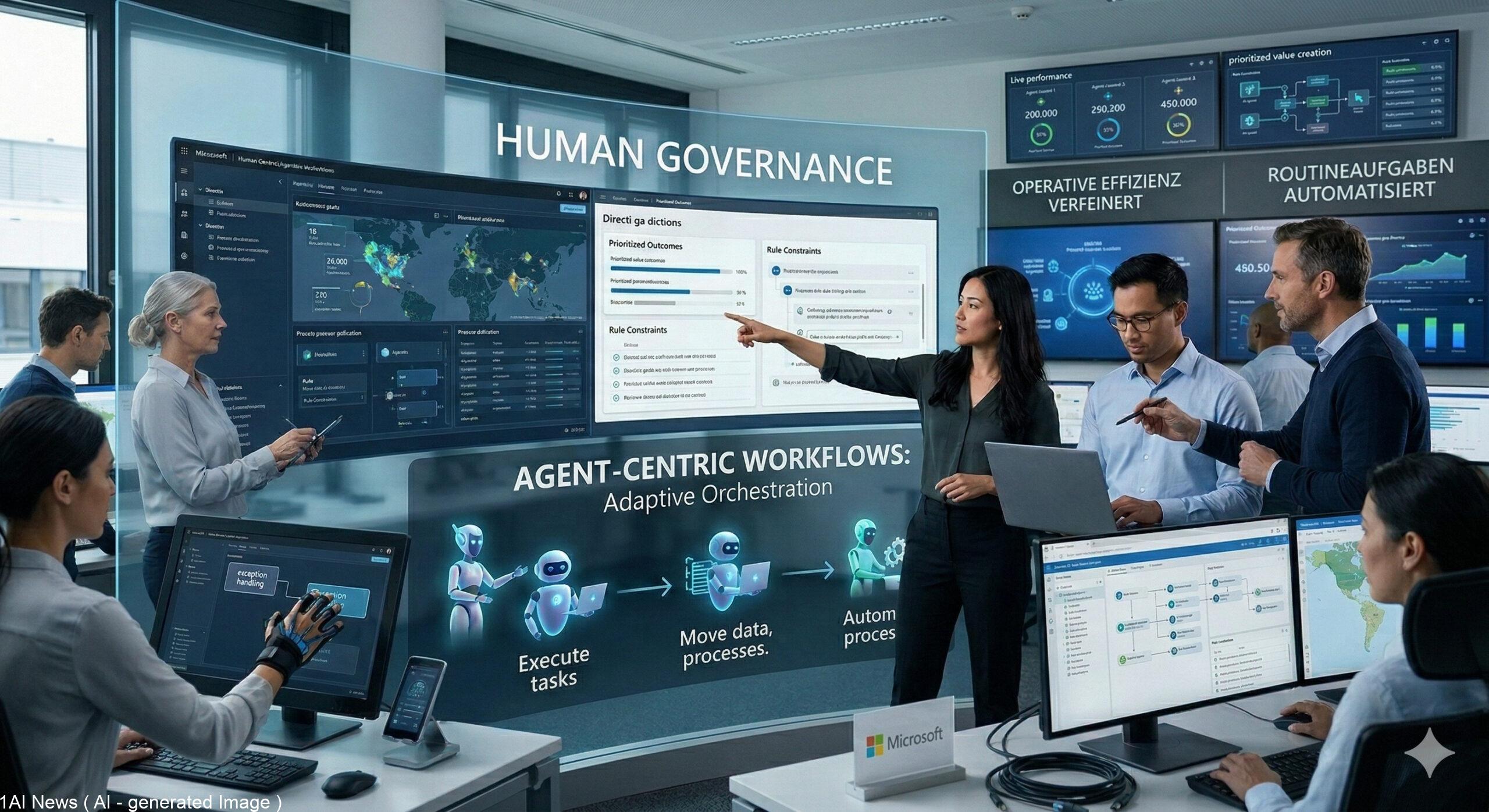
In an Agent-First-Operation structure, Artificial Intelligence Systems take over the process control, while people set goals, define rule constraints and edit exceptions. Scott Rodgers, global chief architect and US CTO of Deloitte Microsoft Technology Practice, considers shifting the operating model to people as governors and agents as operators as necessary. The agent-first requirement means that AI agents powered by generative artificial intelligence will fundamentally change organizations over the next two years and achieve results that can go beyond traditional automation. These initiatives have the potential to produce significant performance gains while shifting people to higher workmanship. AI is developing so quickly that static approaches to task automation will only achieve marginal profit. Therefore, AI agents require machine-readable process definitions, explicit rule constraints, and structured data flows, as Rodgers states. In addition, the situation is complicated by the fact that many companies do not understand the full economic driving force of their business activities, such as costs per service and per transaction. As a result, they are struggling to prioritize agents who can create the most value and instead focus on splendid pilot projects. In order to achieve structural changes, managers should think differently. Instead, companies have to orchestrate results faster than competitors.The real risk isn’t that AI doesn’t work – it’s that competitors rebuild their operating model during their agent and copilot pilot phases, says Rodgers.Non-linear profits are achieved when companies create agent-centered workflows with human governance and adaptive orchestration.Routine and repetitive tasks are increasingly being processed automatically, giving employees the opportunity to focus on higher workmanship, creative and strategic work. This layer refines operational efficiency, promotes stronger cooperation and speeds up decisions – which helps companies to modernize the workplace without sacrificing corporate security.
Source: technologyreview.com